No: 79 / Family: Platycnemididae / Genus: Indocnemis
Name: Indocnemis orang / Purple-chested Giant Threadtail*
Habitat: Forested streams
Province(s): Widespread
In flight: April-October / Sightings (by me): Fairly common
In flight: April-October / Sightings (by me): Fairly common
Easily confused with: N/A
*As there is no common name, I have used 'Purple-chested' from the Thai name and given the genus the name 'Giant Threadtail'.
When I visited Nam Nao National Park for the first time back in October 2008, I visited one of the waterfalls and noticed a decent sized damselfly. I had no idea what it was, so I sent the photo to Noppadon Makbun to identify. He told me that it was Indocnemis orang. I have since seen this species on numerous occasions, but they tend to hang away from the main flow of the stream, seemingly guarding tiny, almost stagnant pools of water.
The Male
The male is large in size and loves to hang around near waterfalls. It has a purple/deep blue mark on the thorax and lighter blue markings underneath. The abdomen is black except for the end segments which have a distinctive blue mark.


The male in its typical 'hanging' position.


In the hand...
This photos gives a good idea of just how large this species is.

Playing dead...
I managed to catch two specimens by hand and both then decided to play dead. Below is one of them. It was great to observe. When I placed him back in the tree, he simply flew away.

The 'Young' Male
On a recent trip to Phu Wiang NP in Khon Kaen, I was very happy to see two females and a male of this species. All the specimens were at a slightly younger stage and didn't yet possess the right colouration. Here is the male I saw. Note how the antehumeral stripes are rather narrow.


The Female
The female of Indocnemis orang. It looks similar to many other females, but is generally much larger. This is a mature female that has become bluer with age.

The 'Young' Female
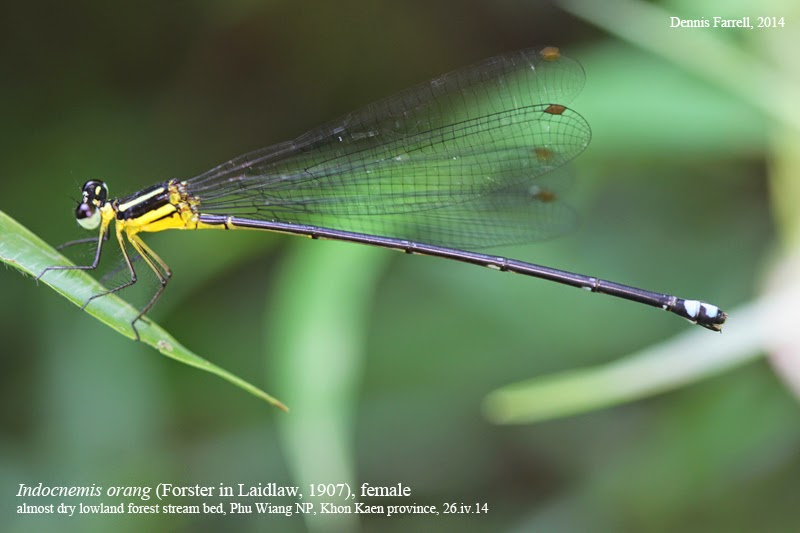
The younger females have yellow markings to the side of the thorax and greenish on top. The markings on the abdomen are also different to other species that reside in the same place.

The Male Appendages


No comments:
Post a Comment