No: 100 / Family: Gomphidae / Genus: Ictinogomphus
Name: Ictinogomphus decoratus melaenops / Common Flangetail
Habitat: Exposed Ponds, Lakes and Slow Sreams (Uplands & Lowlands)
Province(s): Widespread
In flight: Year-round / Sightings (by me): Extremely common
In flight: Year-round / Sightings (by me): Extremely common
Easily confused with: Gomphidia abbotti abbotti, Gomphidia kruegeri kruegeri, Gomphidictinus perakensis, Ictinogomphus acutus, Ictinogomphus rapax, Sinictinogomphus clavatus phaleratus
A large Gomphidae I see almost every trip patrolling large lakes and ponds, is Ictinogomphus decoratus melaenops. It must be the most common Gomphidae of all. It is easy to identify and fairly easy to get near to as it often returns to the same stick.
The Male
The male is black with strong yellow markings along the thorax and abdomen. The base of S-1 and S2 (partially) are white. The frons is yellow and the eyes are blue/green. The caudal appendages are also very long and the end segments are "club" like.


Be careful with this species... I have bought a small net to capture some species for identification, before release. I am now going to try and take photos of all species in nature and in hand. All dragonflies bite, but it is so weak, you can't even feel it. This bugger, on the other hand, had a really good bite. And, though it didn't draw blood, I could really feel it! Well worth the effort though!


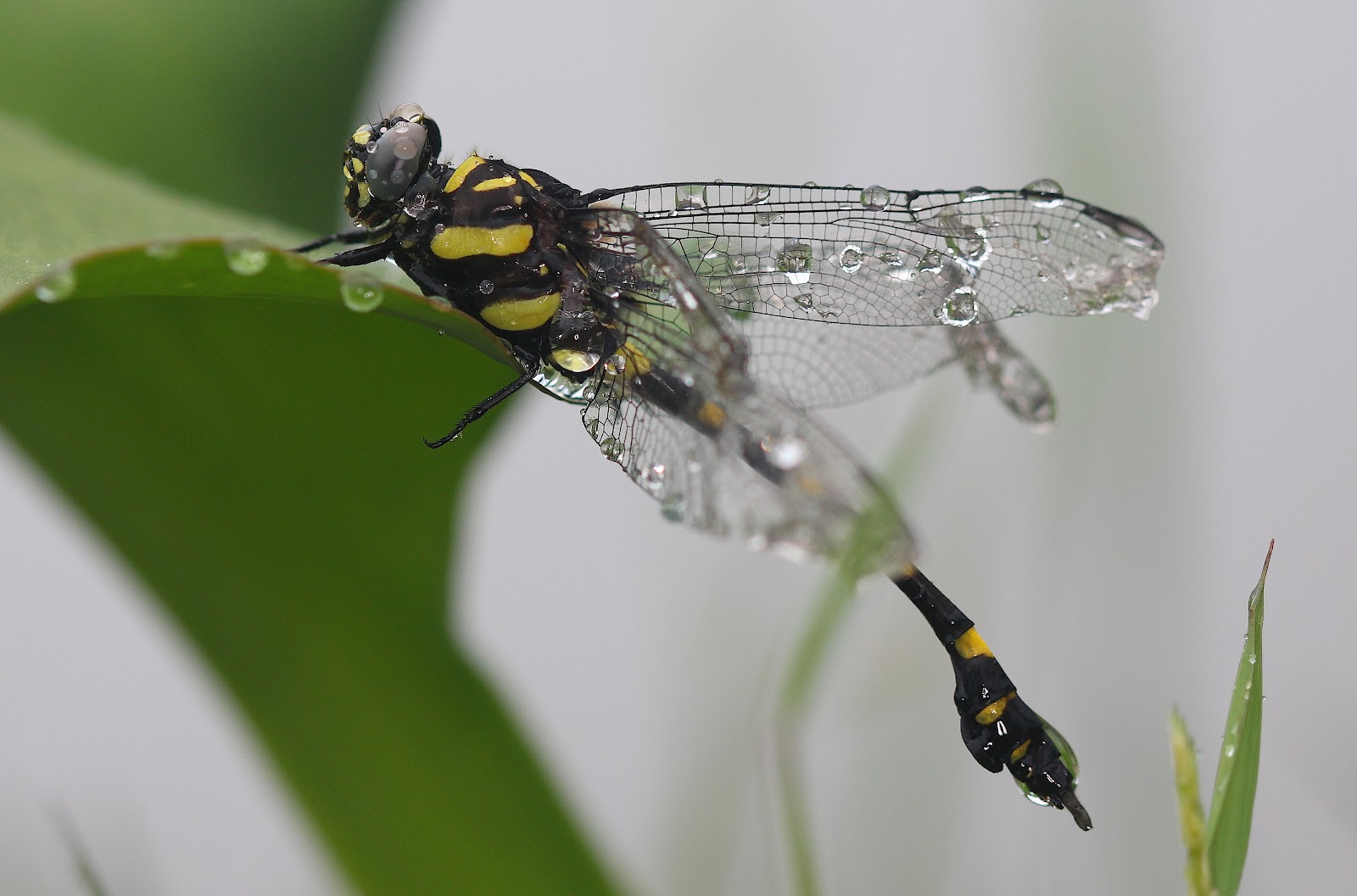
The 'Teneral' Male
... not off to the best start. This male had to endure torrential rain just after it had emerged at the Helicopter Pad, Nam Nao.


Here's the exuviae from which he emerged ...

The Female
This is the only the second female I have managed to photograph in 6 years. Unlike the male, they tend to hide away more up in the treetops. The markings are slightly different to that of the male.


This specimen has a deformed abdomen but I doubt it will cause it too many problems.


Hello, I have found a dragonfly dying in a pool in Phuket. Could it be this species?
ReplyDeletehello there admin, do you mind elaborating on the key features which distinguish males of the species I. decoratus from the females? Preferably the more obvious differences. Thank you in advance!
ReplyDelete